
July 23, 2026
App Store Optimization (ASO): What It Is and How It Works in 2026
About 65% of people discover new apps by searching the store, which makes the search bar the biggest discovery channel most apps have. That number explains why so many good apps launch to silence. Building the app solves one problem. Getting the store algorithm to surface it, and getting searchers to tap “Install,” is a different one.
This guide breaks down what App Store Optimization (ASO) is, how it works in 2026, and how to build a strategy around it, based on OneMobile’s experience helping hundreds of e-commerce apps launch and grow.
What Is App Store Optimization?
App Store Optimization (ASO) is the practice of improving an app’s store listing to rank higher in search and convert more viewers into installs. People often describe ASO as “SEO for apps,” and the two share the same core idea: optimize your content so a search algorithm ranks it higher. The difference sits in what you optimize for. SEO typically centers on driving traffic to a website. ASO measures success in installs, so your listing has to do two jobs: show up when people search, then convince them to download.
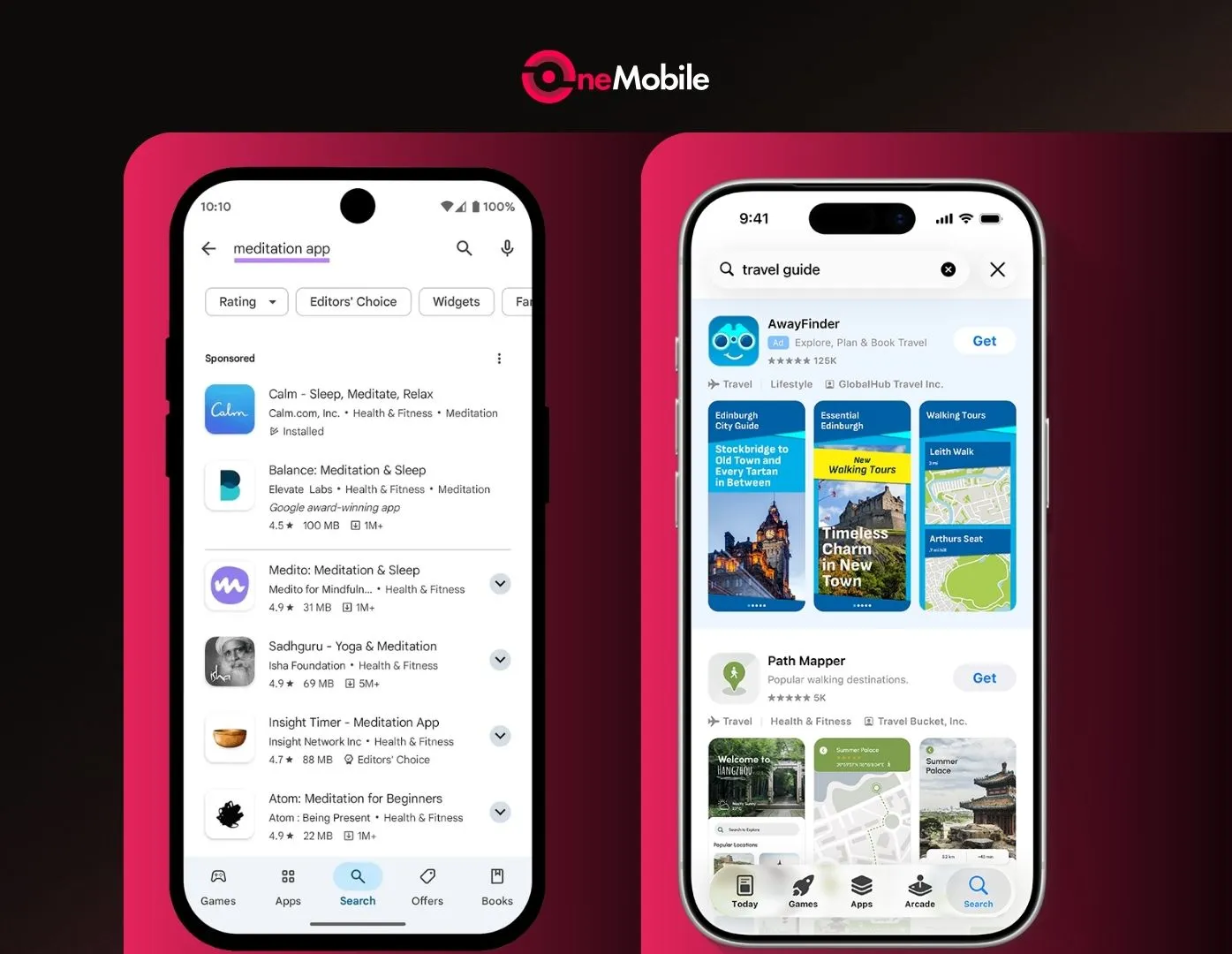
In practice, successful ASO comes down to three key pillars:
- Keyword optimization: matching your listing to the terms people actually type into the search bar
- Conversion optimization: turning views into installs through visuals and copy
- Discoverability: the broader signals, like ratings, update frequency, and retention, that decide whether the algorithm shows your app at all
Get all three working together, and your growth stops leaning so hard on paid ads.
Why Does ASO Matter?
ASO matters because it turns your store listing from a static page into a growth asset. That value shows up in four ways:
- It captures high-intent traffic: When someone types a search into the app store, they already know what they’re looking for. An optimized listing meets them at that exact moment, without ad spend, and users who found you themselves tend to stick around longer than users interrupted by an ad.
- It maximizes the ROI of other marketing channels: Your store listing is the final destination for all your traffic, whether it comes from paid ads, email campaigns, or social media. An optimized listing converts more of that traffic into installs, which directly lowers your Cost Per Acquisition (CPA) on paid campaigns.
- It establishes instant credibility: Top rankings, clean visuals, and strong ratings serve as social proof at a glance, giving visitors the confidence to install without hesitation.
- It triggers a compounding growth loop: Paid ads stop delivering the moment you cut the budget, while ASO keeps building equity. Better conversion lifts your rankings, higher rankings bring more visibility, and more installs feed the cycle again.
How Does App Store Optimization Work? (Ranking Factors)
Having covered why ASO matters, the next step is understanding the ranking factors behind it.
The Signals Both Stores Score
The simplest way to understand ranking factors on both stores is to split them into two groups: the metadata you control, and the performance metrics your users generate.
| What You Can Control (On-Page Metadata) | What the Algorithm Tracks (Performance Metrics) |
| App name & subtitle: The primary text fields the store scans to match your app with search queries. | Downloads & velocity: Total installs and the pace at which you gain them. |
| Visual assets (icon, screenshots, preview video): The visual elements that persuade visitors to install. | Retention & churn: How long users keep and use your app after installing. |
| App description: The long-form text that explains features and benefits (indexed on Google Play, persuasive on iOS). | Ratings & reviews: User scores and written feedback. You can’t write these yourself, but you can influence them through timely prompts and active responses. |
| App updates: How often you release updates; regular updates signal an active, maintained app. |
This is how those signals appear to an App Store visitor.
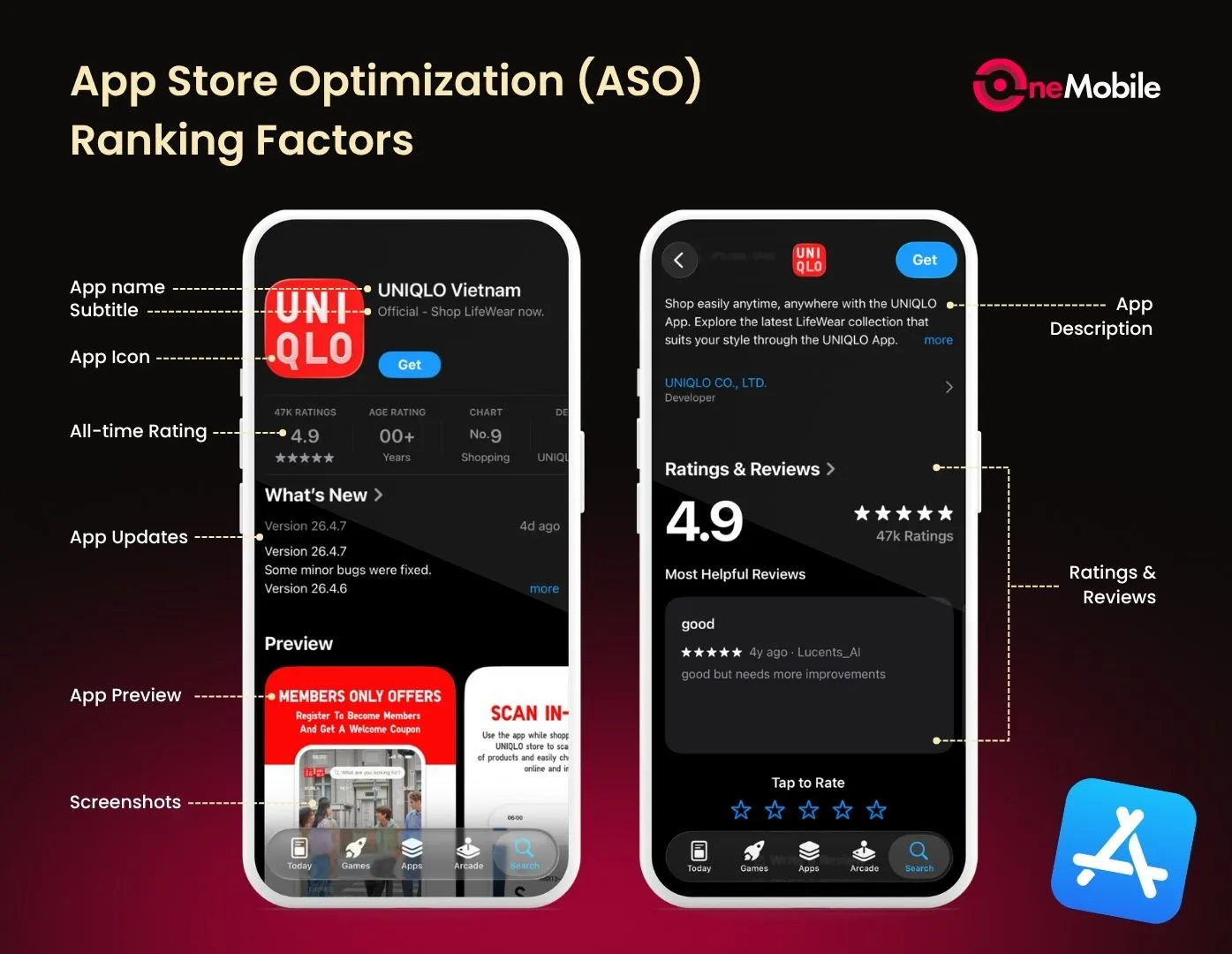
Note: Google Play shows these elements differently and follows a distinct ranking approach.
Where the App Store and Google Play Differ
Both stores read the same core signals, but each indexes and weights them very differently. The App Store rewards precision and ignores repeated keywords, while Google Play reads natural language and needs repetition for context.
| App Store (iOS) | Google Play (Android) | |
| Where keywords get indexed | Title, subtitle, and a hidden 100-character keyword field | Title, short description, and long description |
| Repeating a keyword | Adds almost no ranking value after the first mention | Helpful. The algorithm needs repetition for context |
| Long description | Not indexed at all | Fully indexed (aim for 2-3% keyword density) |
| Strongest single signal | Download velocity | Total installs combined with retention |
The differences extend further – screenshot indexing, A/B testing, and how backlinks factor in all vary between the two stores.
What’s Changing in 2026
The way stores weigh these signals keeps shifting. In 2026, Apple now tracks what users download after searching a term, Google has moved from install volume toward retention, Custom Product Pages appear in organic search, and screenshot text may soon carry keyword weight.
Turning ASO Knowledge Into a Strategy
Knowing how rankings work doesn’t automatically translate into growth. Without a structured approach, most teams end up running isolated updates -swapping a screenshot here, changing a keyword there – with no way to tell what actually moved the needle.
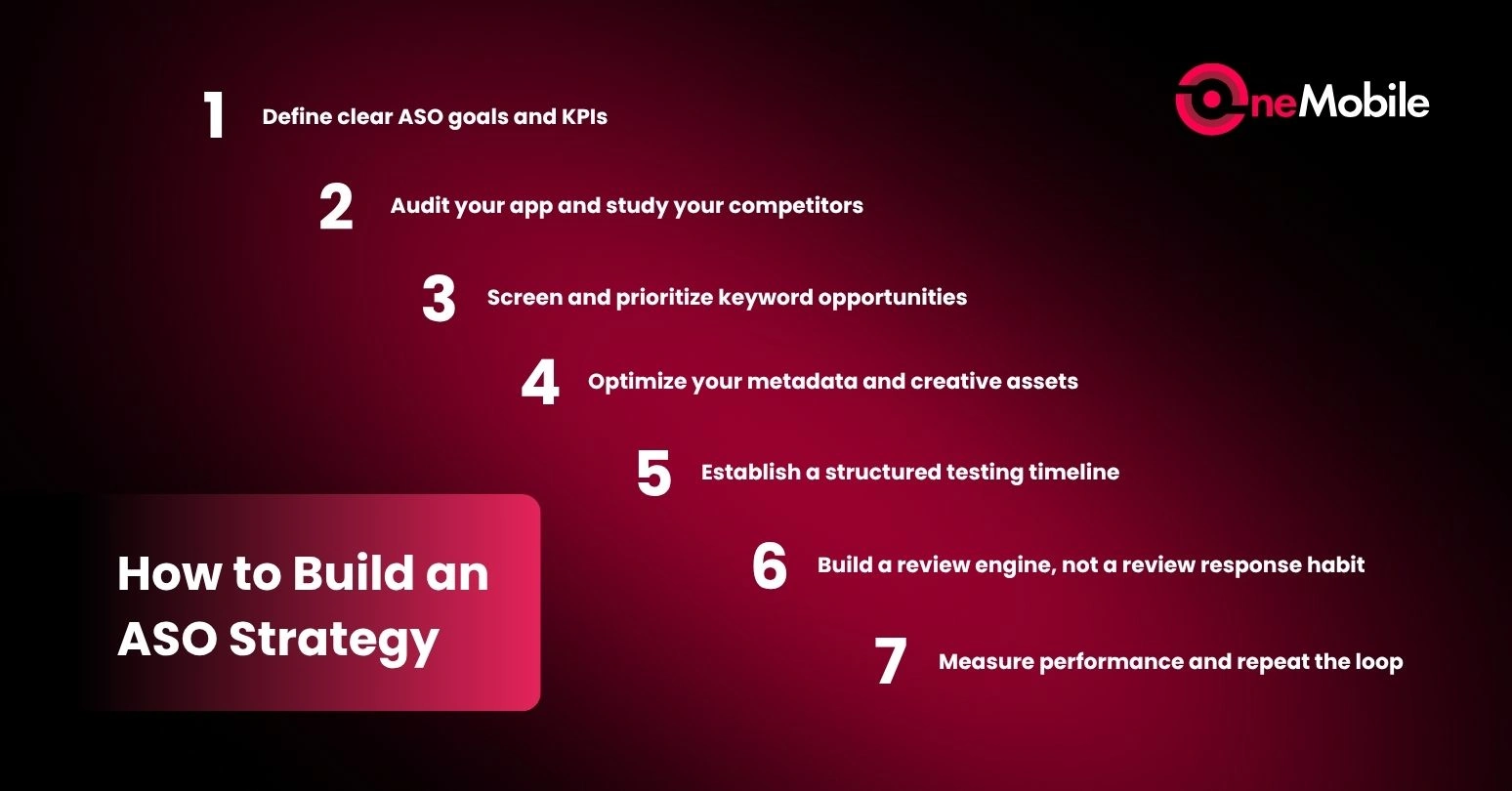
A real ASO strategy ties those moving parts together: the right sequence, a fixed testing timeline, and a feedback loop that compounds over time. Our step-by-step ASO strategy guide walks through the full seven-step framework, from setting KPIs tied to your app’s lifecycle stage to building a review engine that feeds real user language back into your keyword pool.
ASO Tips for Shopify Apps
Everything above is about winning the app store search bar. If you already run an established Shopify store, though, your fastest, and most profitable path to installs is to convert the website traffic and customers you already have.
Three high-converting touchpoints do most of the heavy lifting:
- Post-purchase prompt: Add a banner on the checkout “Thank you” page to convert customers while they are already in a high-intent buying mindset.
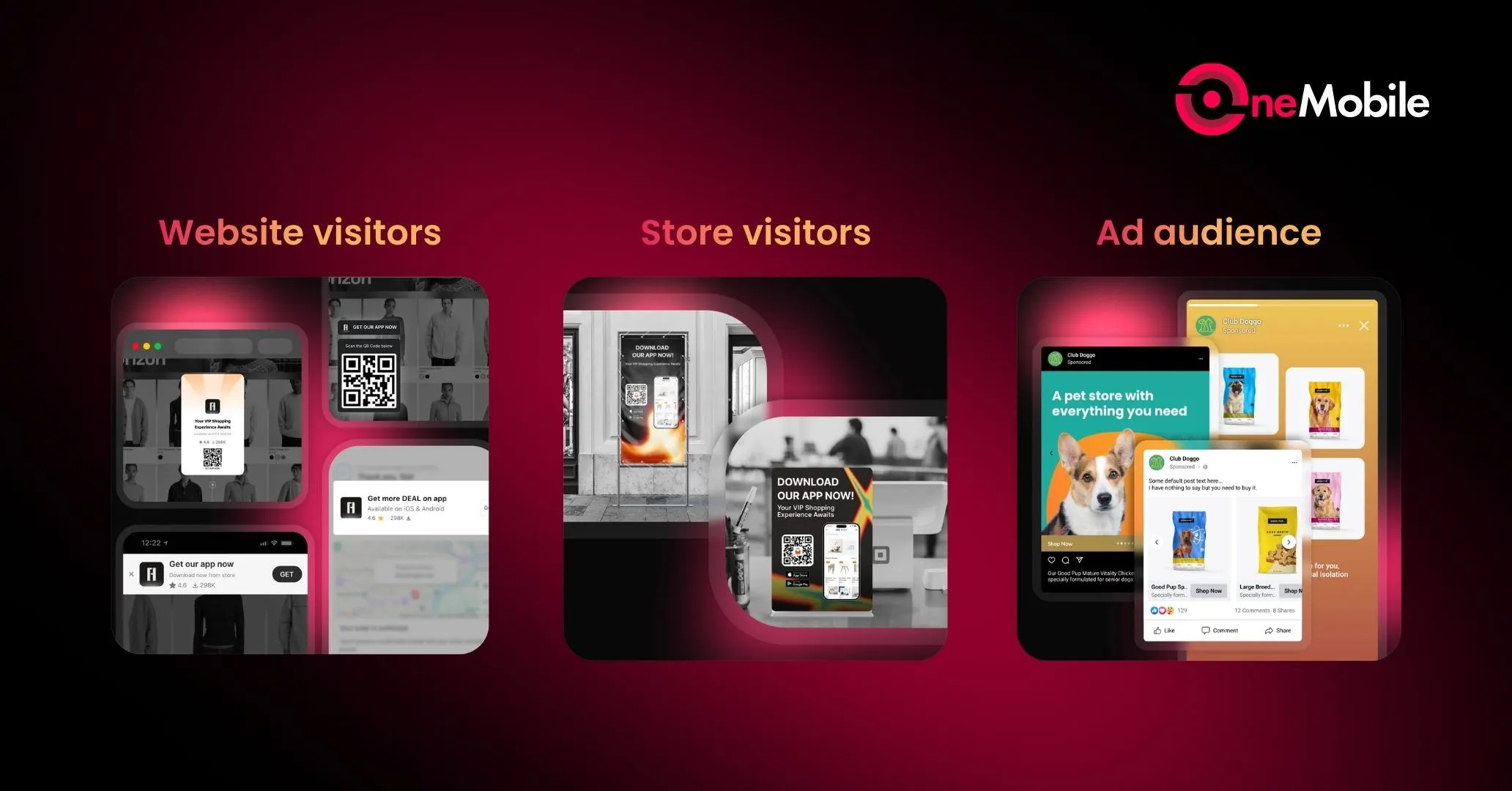
- Omnichannel QR codes: Place deep-linked QR codes on your website, physical stores, POS receipts, and social creatives to turn every touchpoint into an install opportunity.
- Onboarding email campaign: Send a segmented email series promoting mobile-only perks like faster checkout and exclusive deals, with a direct deep link to the app.
The Bottom Line
App Store Optimization is the ongoing work of improving your app’s visibility and conversion rate on the App Store and Google Play, through the metadata you control and the performance signals your users generate. And everything in this guide points one direction: apps rarely lose rankings to better competitors. They lose to their own neglected listings. Outdated screenshots, unanswered reviews, keywords no one searches anymore. Keep the loop running and you’re ahead of most of the store.
Start small this week. Open your listing, find the one thing that’s gone stale, and fix it. Then do it again next month. That’s the entire discipline, and it’s what we help hundreds of Shopify stores do at OneMobile after every launch.
Frequently Asked Questions
1. How much does ASO cost?
The core work can be done for free. Keyword research and metadata optimization need time more than budget, and your only real spend is an optional tool subscription once you scale.
2. How long does ASO take to show results?
From a few days to a few months. Metadata updates shift rankings within weeks, but long-term signals like user retention and ratings take a few months to show full impact.
3. Is ASO different from SEO?
Yes. SEO gets websites ranked on search engines, while ASO gets apps ranked inside the App Store and Google Play, where different algorithms and ranking factors apply. ASO also carries a heavier conversion job, since your listing must turn visitors into installs on the spot.
4. Does ASO work for brand-new apps with no reviews?
Yes, by leveraging keyword relevance and visuals. Without a rating history, you must rely on strong keyword relevance to get discovered and compelling screenshots to convert early users.
5. Is ASO the same for iOS and Android?
No. The signals are similar, but each store indexes them differently: on the App Store, repeating a keyword adds almost no value, while Google Play reads long descriptions and rewards natural repetition at around 2-3% density.
6. What should I optimize first if my time is limited?
Your app title and the first three screenshots. The title carries the most algorithmic weight for search, and most users never scroll past the third screenshot, so those first frames do most of your conversion work.
7. Is ASO different for E-commerce or shopping apps?
Yes, your app store listing must look like an online shop. While regular apps sell features, e-commerce ASO uses screenshots and copy to showcase products, seasonal sales, and fast checkout, because shoppers decide with their eyes.

OneMobile Team
Shopify Mobile App Builder
“OneMobile is the best Shopify Mobile App Builder that empowers merchants to effortlessly design, build, and launch fully-branded iOS and Android apps—without writing a single line of code. Transform your mobile presence into a high-converting sales channel with ease.”
Table of Contents
Table of Contents
Read more articles
How to Build an ASO Strategy: A Step-by-Step Framework for 2026
By OneMobile Team
July 23, 2026
Best Shopify Mix & Match Bundle Apps (2026): 7 Options Compared
By OneMobile Team
August 14, 2026